When the Bank's Number Comes In Lower: Surviving a Thai Condo Appraisal Shortfall

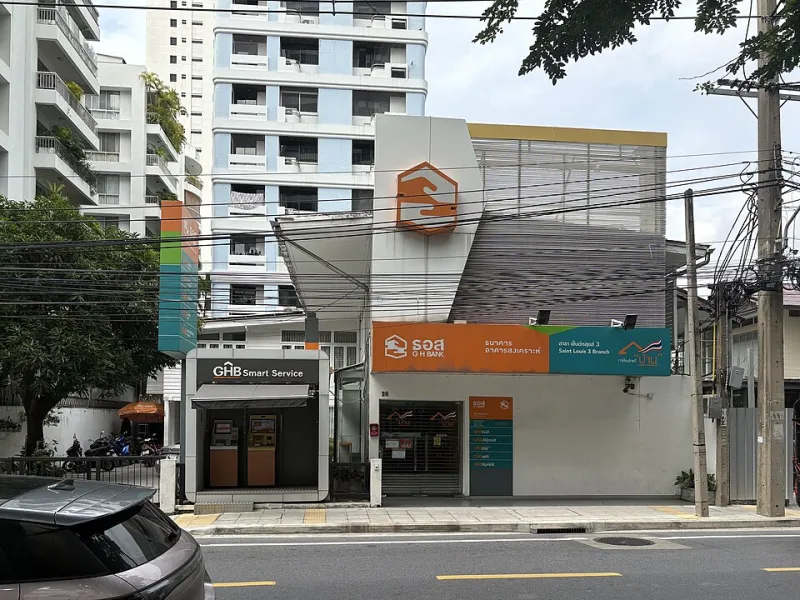
Photo: Meow2021, CC BY-SA 4.0, via Wikimedia Commons
American buyers tend to treat the appraisal as a formality — a checkbox that arrives a week before closing, occasionally annoying, rarely decisive. In Thailand the valuation is the spine of the entire approval. The bank does not ask what you agreed to pay. It asks what it could recover if it had to sell the unit without you, and it lends against that second number. The distance between the two figures is the appraisal gap, and it is measured in cash you must produce on closing day.
The Contract Price Is Not the Collateral Value
When you sign a reservation form for a 5,000,000 baht condominium, you have created a price between two willing parties. That is a market signal, but it is not evidence a Thai credit officer will accept. Thai banks underwrite condominium loans against a forced-sale assumption, because their downside case is a repossessed unit in a building with a slow secondary market. The appraiser's job is to protect the bank, not to validate your enthusiasm.
This is not cynicism; it is structure. In the United States, Fannie Mae and Freddie Mac create a liquid secondary market that rewards appraisals tracking retail prices closely. Thailand has no equivalent securitization engine pushing valuations upward. The result is a persistent, structural conservatism that runs five to fifteen percent below asking prices in many Bangkok and resort-market buildings, and considerably more in thin markets.
Why Thai Valuations Tend to Land Low
- Comparables come from registered transactions. Appraisers lean on Land Office records and recent transfers in the same building. Pre-sale premiums, showroom finishes, and "fully furnished" packages are rarely captured.
- The furniture is not collateral. A 400,000 baht furniture and appliance package may be real value to you and near zero to the bank.
- Usable area is measured, not marketed. A unit sold as 42 square meters may register at 38 on the chanote. Lenders value the registered figure.
- Off-plan units are valued as land plus shell. Until the building exists and the unit is registered, the appraiser is guessing at a future asset with today's comparables — a guess that usually lands beneath the developer's launch pricing.
- Foreign quota and rental restrictions narrow the buyer pool. A unit that can only be resold to foreign buyers, or whose building forbids short-term letting, is worth less in a forced sale.
The Arithmetic of a Shortfall
Assume a 5,000,000 baht contract. You planned a 20 percent down payment of 1,000,000 baht and an 80 percent loan of 4,000,000. Your profile, however, qualifies for 70 percent loan-to-value on condominiums, and the appraisal returns 4,300,000 baht.
- Approved loan: 70 percent of 4,300,000 = 3,010,000 baht
- Cash required against the contract: 5,000,000 − 3,010,000 = 1,990,000 baht
- Shortfall versus your plan: roughly 990,000 baht, before closing costs
At any plausible exchange rate, that is well over US$25,000 you did not budget. Note also that the LTV ceiling itself may be stricter than the headline rate you were quoted — many Thai banks cap foreign-national condominium lending at 70 percent, and some at 50 to 60 percent for certain building types or leasehold units.
Off-Plan and Resale Leak in Different Places
With a resale unit, the gap usually comes from a seller asking above the building's transaction history, or from counting furniture and renovation spend the bank ignores. The remedy is largely informational: pull the comparables yourself before you negotiate.
With an off-plan unit, the gap is built into the developer's pricing model. Launch prices embed a margin that will not exist in registered resales for several years, so a valuation ordered at handover frequently disappoints. Buyers who reserved at a soft launch in a building that has since sold well sometimes beat the appraisal; buyers who paid a peak price in a crowded segment often do not.
Seven Moves Before You Wire the Difference
- Order the valuation before the reservation. Ask a lender for a pre-approval that includes an appraisal of the specific unit. It costs a few thousand baht and can save you a deposit.
- Appraise with two banks. Valuations for the same unit commonly differ by five to fifteen percent. A second opinion is cheap insurance.
- Use the number as negotiating leverage. A developer facing a lost sale will often reduce the price, absorb furniture costs, or accept a staged payment plan. Present the appraisal in writing.
- Recalculate your true cash stack. Add transfer fees, mortgage registration, sinking fund, common area prepayment, and legal fees — then add the gap.
- Ask whether a co-borrower changes the LTV band. A second income can move you to a better tier without changing the appraisal.
- Reconsider the unit size or floor. The gap may be telling you something about the building that your view did not.
- Do the walk-away math honestly. A forfeited deposit plus appraisal and legal fees is often smaller than a structural overpayment.
The Reservation Form Is Where This Is Won or Lost
Most Thai reservation documents are short, one-sided, and contain no financing contingency. If your loan comes in low, the deposit is typically gone. Before signing, request a clause stating that the deposit is refundable if a bank valuation falls below a stated percentage of the contract price, or if financing is declined. Developers resist; some accept. Ask in writing, and keep the reply.
Finally, resist the framing that a gap is a temporary inconvenience to be bridged. It is a second opinion on price, delivered by an institution with no interest in your optimism. Treat it as information, price your offer accordingly, and let the bank's conservatism become your protection rather than your penalty.