Before You Fall in Love With the View: Reading the 49% Foreign Quota Before You Wire a Baht
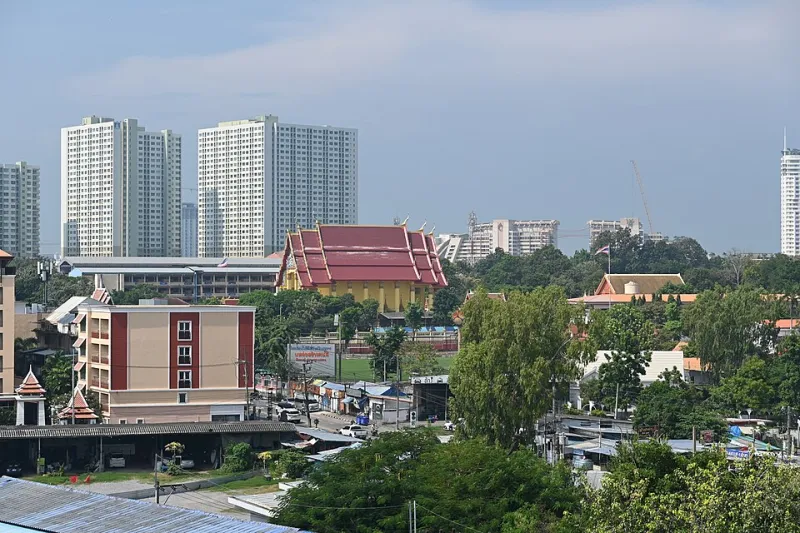
Photo: PattayaPatrol, CC BY-SA 4.0, via Wikimedia Commons
American buyers tend to obsess over the wrong variables when shopping for a Thai condo. They compare baht-per-square-meter prices across neighborhoods, debate whether a river view beats a mountain view, and run financing scenarios through spreadsheets that would make a loan officer proud. What they routinely skip is a single number that can end the entire transaction overnight: the building's remaining foreign ownership quota.
Under Thai law, foreigners may collectively own no more than 49% of the sellable floor area of any condominium building. The remaining 51% must be held by Thai citizens or qualifying entities. This is not a technicality — it is the gate. And unlike most gates in American real estate, this one can be closed when you arrive, no matter how far along you are in the process.
Why the Quota, Not the Market, Decides Your Deal
Think of the 49% ceiling as a shared parking lot with a fixed number of spaces. Every foreign buyer who closes on a unit takes a space. When the lot is full, it's full — regardless of how many units are listed for sale, how motivated the seller is, or how clean your financing looks.
This creates a situation that has no real American parallel. A condo can be fully priced, fully financed, and fully agreed upon, and still be legally untransferable to you at the land office because the building's foreign quota was consumed by other buyers months earlier. Your escrow-equivalent protections do not apply. Thai transfer law does not care about your timeline or your flight back to Chicago.
The practical consequence: quota status should be the first question you ask, not the last.
How to Verify Remaining Quota Before You Deposit
The building's juristic office — the management office that administers the condominium — maintains the records you need. Before signing anything or transferring a deposit, complete this checklist:
1. Request the foreign ownership statement. Ask the juristic office for the current ratio of foreign to Thai ownership in sellable area. Reputable buildings provide this readily; hesitation is itself a data point.
2. Confirm the calculation basis. The 49% is measured in sellable floor area, not unit count. A building can appear under quota by units while being over quota by area. Insist on the area-based figure.
3. Check for pending transfers. Units under contract but not yet transferred still count against available quota. Ask whether any foreign transfers are queued at the land office.
4. Get it in writing. A simple signed statement from the juristic office noting the remaining foreign quota, dated close to your offer date, is your cheapest insurance in the process.
5. Build a quota contingency into your agreement. Your purchase contract should allow cancellation and full deposit recovery if foreign quota is unavailable at transfer. Thai sellers will sometimes resist this clause; that resistance tells you something.
When Deals Collapse at the Transfer Office
Ask around in any expat property community and you'll hear versions of the same story. A buyer from Seattle finds a two-bedroom in Bang Tao, negotiates 4% off asking, wires the deposit, and books flights for the transfer. At the land office, the officer checks the quota sheet: full. The seller's agent had assumed — never verified — that quota was available. The deposit fight that follows can consume more money and time than the original negotiation.
The pattern in these failures is consistent: everyone trusted a verbal assurance, and nobody asked the juristic office directly. Thai agents are often excellent, but quota is a legal fact, not a sales talking point. Verify it yourself.
Financing Angle: Why Lenders Care Too
If you're pursuing financing — whether through a Thai bank or structuring payments from a US account — the lender will verify quota independently before disbursing. A quota problem discovered late can strand you with a deposit committed and no loan to close with. Sequence your process so quota verification precedes both your deposit and your formal loan application. It costs a phone call and a visit; skipping it can cost the deal.
The Bottom Line
The 49% ceiling is not a reason to avoid Thai condos — it's a reason to shop differently than you would in the US. Make quota status a filter, not a footnote. The buyers who close successfully are rarely the ones who found the best unit; they're the ones who confirmed, in writing and early, that the unit could legally be sold to them.