The Paper Is the Property: A Distance Buyer's Field Guide to Thai Land Titles
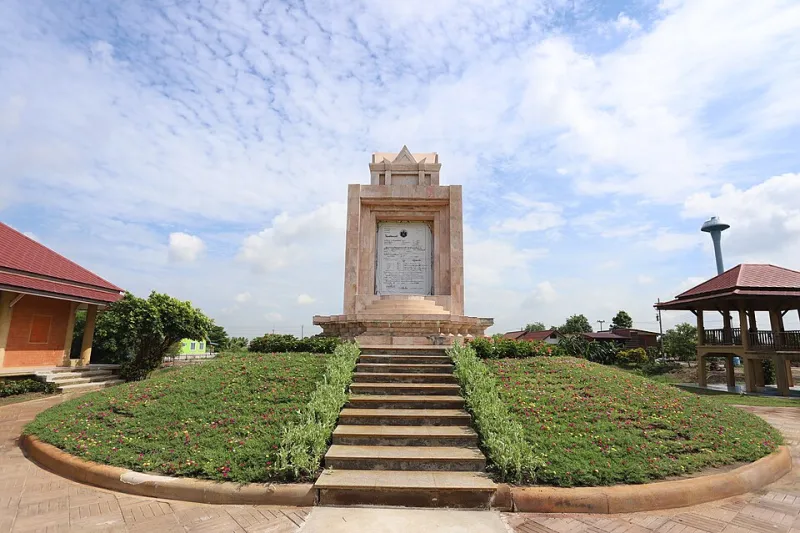
Photo: This Photo was taken by Adirach Toumlamoon. Feel free to use any of my images, but please mention me as the author and may send me a message. (ภาพถ่ายสามารถนำไปใช้งานได้เลย แต่ขอให้ใส่เครดิตแก่ผู้ถ่ายเพื่อแสดงที่มาและอาจจะส่งข้อความแจ้งด้วยก็ได้)
Ask an American buyer what they're purchasing and they'll describe the house: the teak floors, the view of the Andaman Sea, the pool. Ask a Thai land lawyer the same question and they'll describe the document. In Thailand, that's not pedantry—it's the entire transaction. The deed type determines what you actually hold, and two plots side by side with identical villas can sit on radically different legal footing.
Here is the field guide, stripped to what matters when you're buying remotely.
Chanote: The Gold Standard
The Chanote (officially, title deed Nor Sor 4) is Thailand's strongest evidence of ownership. Issued by the provincial land office, it contains a surveyed plot bounded by concrete boundary markers, GPS-referenced coordinates, and a certificate that leaves little room for competing claims.
If you are financing anything, expect a lender to insist on Chanote. If you are buying a detached villa on its own plot—and you should, given that foreigners cannot own land outright and will typically hold the structure through a registered lease or a company structure—Chanote is the document your lawyer will want to see before anything else.
Nor Sor 3 Gor: Confirmed, With Caveats
Nor Sor 3 Gor sits one rung below. It certifies use and occupancy rights that have been formally verified and plotted against the master survey map. Historically, it could be upgraded to Chanote, and in practice it functions similarly for most transactions.
The caveat for a remote buyer: boundaries on a Nor Sor 3 Gor are tied to the survey map rather than to physical markers on the ground in the same definitive way. That's rarely a problem in a developed subdivision with clear lot lines. It can be a serious problem on a rural hillside where your 'half rai' is measured against a map that neighbors interpret differently.
Nor Sor 3: A Claim, Not a Deed
Nor Sor 3 is where American instincts should sharpen. This document certifies the right to use land—but it is not confirmed against the master survey, and it has historically been vulnerable to competing claims precisely because its boundaries rest on testimony and informal markers rather than verified survey data.
That doesn't make every Nor Sor 3 parcel a trap. It makes every Nor Sor 3 parcel a due-diligence project. Legitimate sellers hold such land all the time, often as family land awaiting upgrade. But the discount you might get buying it should reflect the legal work required to confirm it.
Three Scenarios, Three Risk Profiles
The beachfront plot. Coastal land in Thailand carries an extra layer: some shoreline areas fall under public or protected classifications, and older documents in fishing communities can have murky chains of title. A seller showing you a Nor Sor 3 for a beachfront lot, priced like a Chanote, is the single most common setup a remote buyer encounters. Walk in with a lawyer or don't walk in at all.
The land-attached villa. Here the deed question is secondary to the structure question. Foreigners cannot hold land, so the typical arrangement is a 30-year registered lease over the land with ownership of the house registered separately. Verify that the lease is registrable at the land office—only registered leases carry enforceability beyond three years—and confirm the underlying title is Chanote or Nor Sor 3 Gor.
The undeveloped subdivision. New projects on the outskirts of Chiang Mai or Khao Yai often begin life on un-upgraded land. Reputable developers will have converted to Chanote before selling; that conversion is itself a signal of seriousness. Ask to see the developer's title, not just a glossy master plan.
Verifying From a Distance
You cannot walk into a Thai land office from Ohio, but your lawyer can, and this is not a step to economize on. A land office check—called a tor gor 14 search in many provinces—confirms the title's authenticity, the registered owner's name, and any mortgages, leases, or liens encumbering the parcel. It costs a few hundred baht and a day's time.
Additional remote checks worth commissioning: a surveyor's verification that the physical boundary markers match the document, a court and bankruptcy search on the seller, and—for company-structured purchases—a review of the company's shareholding and land-office filings.
The Rule That Survives Every Market Cycle
Titles in Thailand are not graded on a curve, and no amount of architectural charm compensates for weak paper. The discipline is simple to state and easy to skip in the excitement of a purchase: know the deed type before you negotiate, verify it at the land office before you deposit, and treat any pressure to 'reserve the plot now, check the documents later' as the clearest possible signal to slow down.
The land has been there for centuries. The paperwork is the part you actually own.