Stop Calling Rent 'Wasted Money': What Five Years in Thailand Actually Reveals
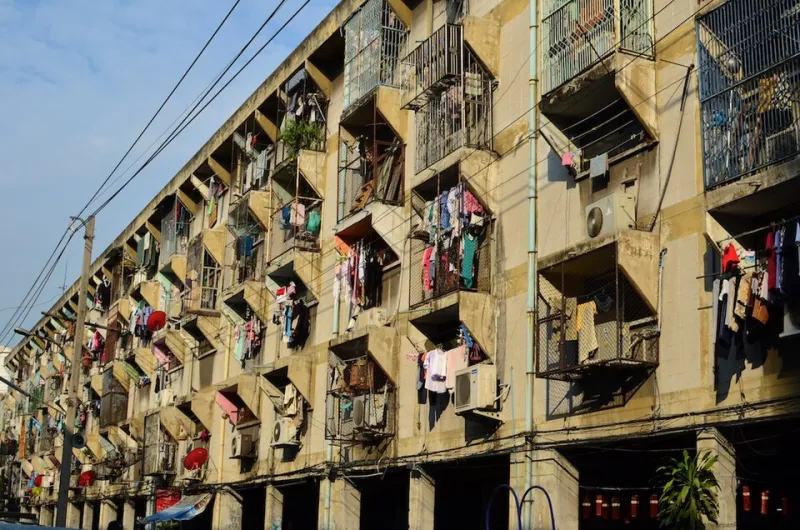
Photo: Roger Price from Hong Kong, Hong Kong, CC BY 2.0, via Wikimedia Commons
Every American expat has heard it from a relative back home: you're just lining your landlord's pockets. In Phoenix or Atlanta, that argument has merit—appreciation, fixed-rate leverage, and deep resale markets make ownership the default answer. Thailand breaks every one of those three pillars, and it is worth walking through exactly how before you sign either a lease or a purchase contract.
The Three Pillars That Don't Transfer
Leverage. As covered extensively in our financing coverage, Thai banks rarely lend more than 50-70% to non-resident foreigners, and many lend nothing. Ownership in Thailand is mostly an all-cash proposition, which means no leveraged appreciation. Your $140,000 earning 4% in a US Treasury ladder is genuine competition for a condo earning market appreciation.
Liquidity. Reselling a condo in Bangkok can take six months to two years. Foreign-buyer demand is cyclical and concentrated in a handful of neighborhoods. In the US, the median existing home sells in under two months. In Thailand, the exit is a rumor until it isn't.
Carrying costs. Thai condos carry common-area fees of 40-90 baht per square meter monthly, sinking fund contributions, and—on older buildings—occasional special assessments for structural work that can run six figures in baht. Renters pay none of this.
The Five-Year Comparison, Honestly Done
Take a comparable 40-square-meter unit in Bangkok's On Nut area: 5,000,000 baht to buy, or 25,000 baht per month to rent.
Buying: 5,000,000 baht down (plus ~400,000 in transfer fees, first-year fees, and legal costs). Over five years, subtract common fees of roughly 200,000 baht, add modest appreciation of 3% annually (~750,000 baht), and assume a resale at a 5% discount for liquidity. Net result after transaction costs: roughly breakeven to a small gain, depending heavily on the building's quality and location.
Renting: 1,500,000 baht in rent over five years, with the remaining 4,500,000+ baht earning 4% in dollar or baht-denominated instruments (~950,000 baht in returns). Total position: materially ahead, with zero liquidity risk and full flexibility to leave.
In Bangkok, over a five-year horizon, renting usually wins. The math only flips when you extend to ten-plus years, and even then the margin is thin.
Where the Math Actually Flips
Phuket, done right. A well-located Phuket condo in a professionally managed rental pool can gross 6-8% annually in short-term rental income. This is a business, not passive ownership—it requires management fees of 25-35% of gross revenue, and it punishes bad locations mercilessly. But for buyers who will use the unit four weeks a year and manage the rental the rest of the time, the economics genuinely favor purchase.
Chiang Mai, for long stays. Chiang Mai rents are low—20,000 baht secures a very comfortable unit—which weakens the rental alternative's cash cost but also means purchase prices are equally modest. A 2,800,000 baht condo held for a decade, used as a semi-permanent base, with minimal fees and a stable foreign freehold quota, can outperform renting on both cash and quality-of-life grounds.
Any city, for ten-plus years. The longer the holding period, the more transaction costs and liquidity risk amortize away, and the more the psychological value of a home you control matters.
The Uncomfortable Conclusion
The American mantra fails in Thailand not because Thai ownership is bad, but because Thai renting is excellent—cheap, flexible, and burden-free—while Thai ownership is expensive to enter and slow to exit. Renting is not wasted money here; it is cheap optionality.
Buy in Thailand when you can answer three questions with certainty: you will hold for a decade or more, you have found a building with genuinely strong foreign demand for resale, and you are funding the purchase with cash you will not need. If any answer is uncertain, sign the two-year lease. The landlord lining their pockets with your baht is, in this market, getting the worse end of the deal.