Cash Is the New Mortgage: Budgeting the Real Cost of a 5 Million Baht Thai Condo
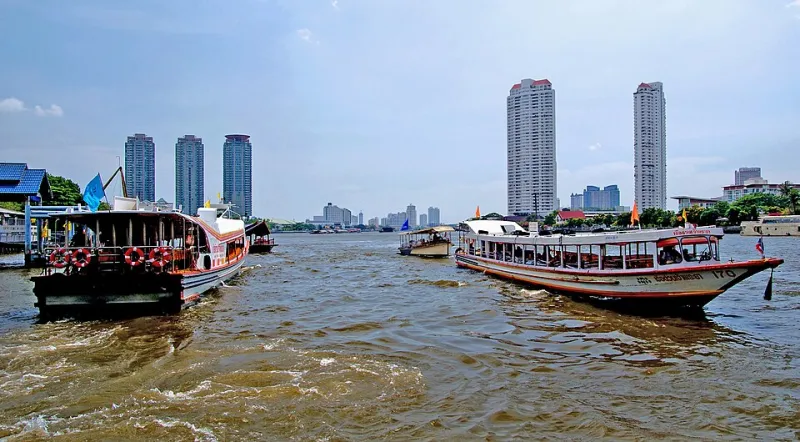
Photo: Bernard Spragg. NZ from Christchurch, New Zealand, CC0, via Wikimedia Commons
American buyers arrive in Thailand with assumptions forged by the US housing market. Back home, an FHA loan asks for 3.5% down; a conventional loan can require as little as 5%. So when a Thai bank quotes a 30% down payment—or declines to lend to a non-resident foreigner at all—the reaction is often disbelief. The disbelief is understandable. It is also expensive if you have not planned for it.
Why Thai Lenders Demand So Much More
Thai banks price risk differently than American ones. A foreign buyer who lives in the United States has no Thai credit file, no verifiable local income, and—critically—no easy mechanism for a Thai bank to seize and resell the collateral if the loan goes bad. Foreign-owned condos sit in a legal gray zone for enforcement purposes, and cross-border collections are slow and uncertain.
The result is a structural ceiling: most Thai institutions will not extend more than 50-70% loan-to-value to a non-resident foreigner, and several large banks have simply stopped writing these loans altogether. The practical planning number for an American buyer is 30% down, with the realistic expectation that you may need to fund the entire purchase in cash.
The Full Budget: A 5,000,000 Baht Condo, Line by Line
Consider a one-bedroom freehold condo in Bangkok's Sukhumvit corridor, listed at 5,000,000 baht (roughly $140,000 at recent exchange rates). Here is what the cash-out-of-pocket picture actually looks like.
Purchase price: 5,000,000 baht. If a lender approves 60% LTV, your down payment is 2,000,000 baht (~$56,000). Assume no financing, and the full 5,000,000 baht is due at transfer.
Transfer fee: 2% of the assessed value, customarily split 50/50 with the seller in Thai practice—though on resale properties, who pays what is negotiable. Budget 50,000 baht for your half.
Foreign Exchange Transaction (FET) form: Not a fee, but a requirement. Any remittance above $50,000 into Thailand must be documented with an FET form from the receiving bank. This paperwork is what allows you to register the condo in your name under foreign freehold quota. Budget a few hundred baht in bank charges, but treat the documentation itself as non-negotiable.
Sinking fund: Most new developments collect a one-time payment, typically 300-800 baht per square meter, into the building's reserve fund. On a 40-square-meter unit, expect 20,000-30,000 baht.
Annual common-area fees: Usually 40-90 baht per square meter per month, often collected a year in advance at closing. Budget 30,000-45,000 baht for the first year on a mid-range building.
Utilities and meter deposits: Minor—2,000-5,000 baht—but required.
Furnishing: Developer units are frequently delivered bare. Mid-range furnishing of a 40-square-meter unit runs 250,000-400,000 baht if you want Western-style comfort: a proper mattress, kitchen appliances, a workable desk. Buyers who skip this line item in their planning are consistently surprised by it.
Legal review: An independent Thai attorney to verify the title (chanote), check the developer's registration, and review the sale contract costs 15,000-30,000 baht. In a market where you will not read Thai and cannot easily verify documents yourself, this is not the place to economize.
Total realistic cash requirement: approximately 5,350,000-5,500,000 baht—call it $150,000-155,000—on a $140,000 property. The overage above the sticker price runs 7-10%.
Strategies That Actually Close the Gap
Remittance planning. Wire funds in staged tranches tied to your construction-payment schedule rather than one lump sum. This smooths currency exposure—the baht moved roughly 8% against the dollar in a single year recently—and keeps a clean paper trail for the FET documentation.
Developer financing. Licensed developers of new-build projects frequently offer in-house installment plans: 10-20% down, interest-free installments through construction, with the balance due at transfer. These are not mortgages in the American sense—there is no long-term amortization—but they convert a lump-sum problem into a 24-36 month savings runway.
Phased purchase. On off-plan projects, contracts often require only 10-15% down before completion. An American buyer with steady US income can accumulate the remaining capital during the construction period. The trade-off is exposure to developer risk, which is why the legal review line item exists.
The Bottom Line
The 30% rule is not a barrier so much as a pricing signal: Thailand is a cash-heavy market for foreign buyers, and the winners are those who budget for the full 110% of the purchase price before they fall in love with a unit. Walk in with the complete number, and the process is straightforward. Walk in with American down-payment assumptions, and the process stalls at the bank.