One Condo, Two Currencies: Structuring Your Thai Mortgage Payments From a US Bank Account

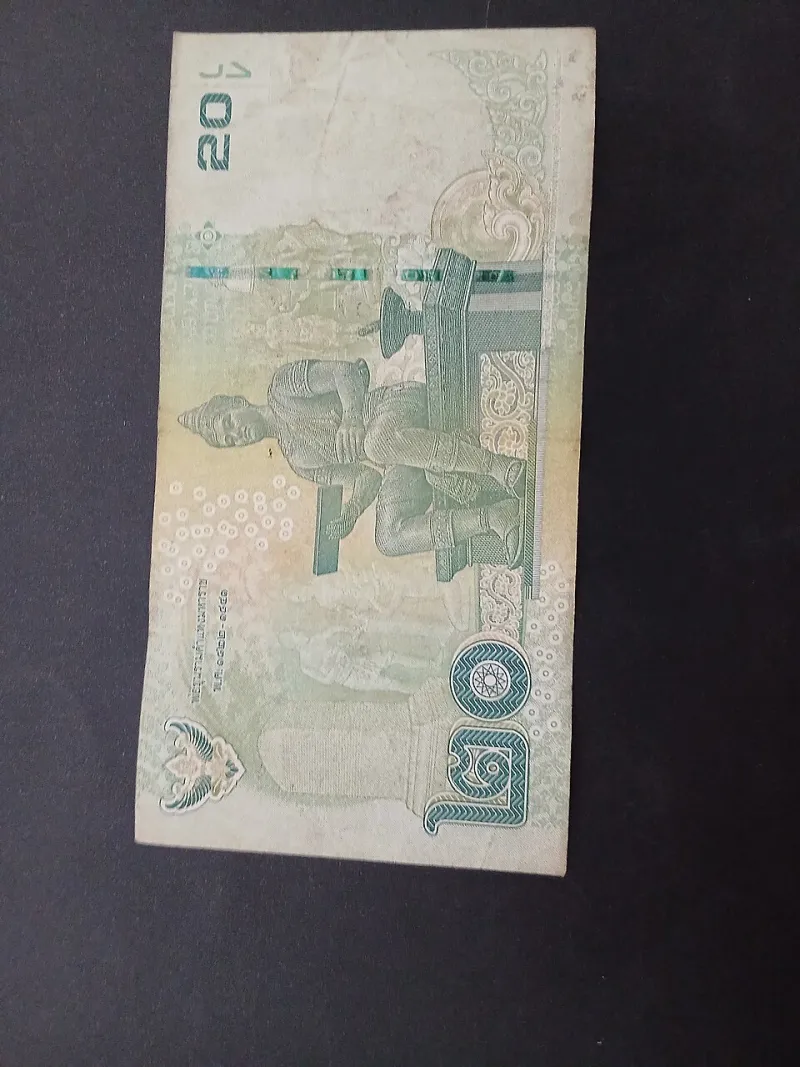
Photo: Donald Trung Quoc Don (Chữ Hán: 徵國單) - Wikimedia Commons - © CC BY-SA 4.0 International.(Want to use this image?)Original publication 📤: --Donald Trung 『徵國單』 (No Fake News 💬) (WikiProject Numismatics 💴) (Articles 📚) 22:03, 12 June 2023 (UTC), CC BY
American buyers in Thailand quickly discover a truth that rarely appears in the sales brochure: closing on the condo is the easy part. The harder question is mechanical and unglamorous—how, exactly, will your payment reach a Thai lender every month for the next decade?
There are three workable answers, and the right one depends less on interest rates than on your life pattern. A retiree who spends four months a year in Hua Hin has different needs than a full-time expat in Bangkok. Here's how the main structures compare.
Option One: The Foreign Currency Deposit Account
Several Thai banks offer foreign currency deposit (FCD) accounts, which let you hold US dollars on deposit in Thailand and convert to baht as needed. For Americans, the appeal is control: you park a larger sum—say, a year of payments—on the Thai side of the Pacific, then convert in tranches when the exchange rate moves in your favor.
The trade-offs are real. FCD accounts typically carry maintenance fees, the USD-to-THB spread at conversion is wider than the mid-market rate, and the accounts are generally not insured the way FDIC-covered accounts back home are. You are also taking on timing risk: if you guess wrong about the baht's direction, a year of payments can quietly cost several hundred dollars more than necessary.
This structure tends to suit snowbird buyers—people who visit Thailand regularly, can convert in person or through a relationship banker, and want to avoid twelve individual wire transfers a year.
Option Two: Scheduled Conversions From Your US Bank
The simplest setup is also the most transparent: keep your money in a US account, convert and wire each payment as it comes due. Online services and some US banks now offer baht transfers at rates far better than traditional correspondent-bank chains, often for flat fees in the single digits.
The advantages: your money stays under US regulatory protection, there is no Thai account to open or maintain, and every transaction is documented for tax purposes—a nontrivial benefit given FBAR and FATCA reporting obligations. The disadvantages: you are exposed to rate swings on payment day, wires can take two to five business days, and you must remember to execute the transfer every single month. Miss one during a long trip abroad, and you may be dealing with a late-payment notice in Thai.
Buyers who want minimal Thai-side complexity—and who check their accounts often—gravitate here.
Option Three: A Thai Bank Account With Automatic Debits
Most Thai lenders will eventually ask for it anyway: a local account in your name, with the mortgage payment auto-debited on the due date. You fund it periodically—by wire, or in person during an annual stay—and the bank handles the rest.
This is the structure full-time residents almost always choose, and for good reason. Auto-debit eliminates late payments, many banks offer a small rate discount for it, and a Thai account is practically required for utilities, condo fees, and daily life. Opening one is straightforward for visa holders, though non-residents may need to visit a branch in person with a passport and proof of address.
The wrinkle is funding. You will still need Option One or Option Two to get dollars into that account—which means the real question isn't which single structure to pick, but which conversion method feeds your Thai account.
Timing the Exchange: A Middle Path
Whichever structure you choose, one habit pays for itself: converting when rates are favorable rather than when the due date forces your hand. The baht's multi-year swings against the dollar have been large enough that a buyer who converted a year of payments in advance, versus monthly on the due date, would have seen differences of several percentage points on the same baht amount.
Some buyers simply set a rule: whenever the rate crosses a threshold they're comfortable with, they convert two or three months' worth. It's not speculation—it's smoothing.
A Quick Matching Guide
- Full-time resident: Thai account with auto-debit, funded by periodic favorable-rate conversions.
- Snowbird with a financed condo: Auto-debit for reliability, funded by an FCD account you top up during visits.
- Purely remote investor: Scheduled conversions from a US account, with careful records and calendar reminders.
None of these structures changes what you owe. What they change is how many baht each dollar buys—and over a fifteen-year loan, that quiet arithmetic can matter as much as a quarter-point on your interest rate.